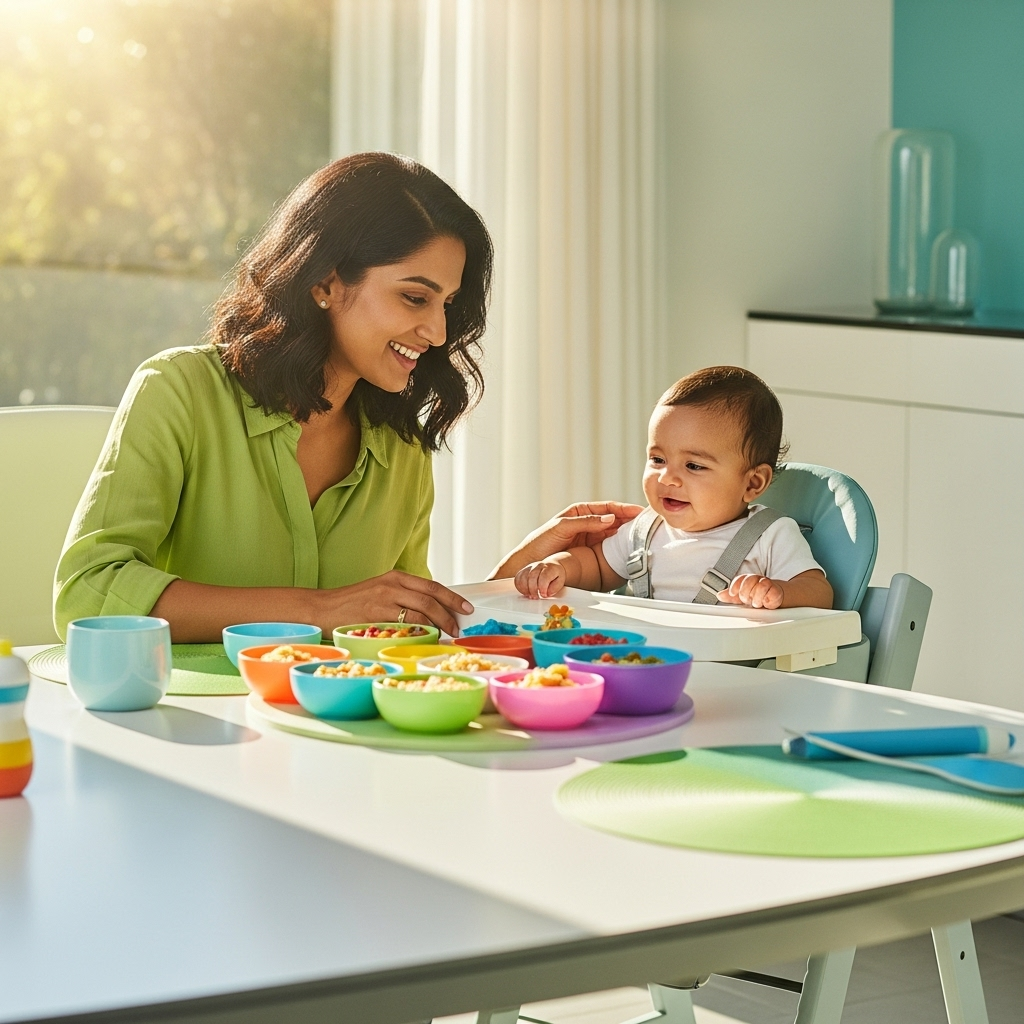
Starting Solids for Your Baby: A Stress-Free Guide for New Moms
Confused about starting solids? You’re not alone. Get expert guidance to help you confidently introduce solid foods to your baby—the right way, at the right time.
Starting solids is an exciting milestone, but for most new mums, it can feel overwhelming. You’re flooded with conflicting advice from relatives, social media, and Google searches.
You just want clear answers. You want to do it right. And most importantly, you want your baby to be safe, happy, and healthy as they begin this new journey.
Our workshop provides step-by-step guidance with love, care, and clarity to help you recognize when your baby is truly ready for their first foods.
Signs Your Baby Is Ready
Can sit upright with minimal support
Shows interest in what you’re eating
Has good head and neck control
Lost the tongue-thrust reflex
Typically around 6 months of age
What NOT to Rely On
Baby’s weight alone
Peer pressure from other parents
Old advice to start at 4 months
Baby waking more at night
Relatives saying “it’s time”
Meet Your Mentor: Jyoti Srivastava
Jyoti combines evidence-based knowledge with real-life mom wisdom, making the feeding journey approachable, safe, and empowering for first-time parents
Expert Credentials
UNICEF-Certified in Infant & Young Child Feeding
Founder of Baby food brand Littlecherrymom, trusted by over 50,000+ mothers
Nutrition educator and gentle feeding advocate
Her Philosophy
“Starting solids should feel joyful, not stressful. I’ll help you build confidence with every spoon.”
First Foods That Work for Indian Babies
Choosing the right first foods is crucial for your baby’s nutrition and development. Our workshop focuses on age-appropriate, nutrient-rich options you can easily prepare at home
Soft Khichdi
Easy-to-digest first food rich in protein and carbohydrates. Perfect for developing taste and providing balanced nutrition
Mashed Fruits
Ripe bananas, soft papaya, and stewed apples provide essential vitamins and introduce natural sweetness safely.
Dal Puree
Excellent source of plant protein and iron. Can be made thinner initially and thickened as baby develops.
The workshop includes a complete guide on food consistency, portion sizes, and how to gradually introduce spices and flavors in an Indian context.
Feeding Approaches Explained
One of the biggest questions new mothers face is which feeding method to choose. Our workshop breaks down the options so you can make the best choice for your family.
Traditional Spoon-Feeding
Purees and smooth textures introduced gradually. Gives parents more control over what and how much baby eats. Often feels more familiar to Indian families.
Baby-Led Weaning
Offering finger foods from the start. Lets baby control the pace and amount. Promotes independence and may help develop motor skills.
Mixed Approach
Combining methods for the best of both worlds. Most practical for Indian families, allowing babies to explore while ensuring nutrition.
There’s no one-size-fits-all approach. Our workshop helps you identify which method aligns with your parenting style, cultural practices, and your baby’s unique temperament.
You’ll learn practical tips for implementing each approach in an Indian household, including how to adapt family meals for your little one.
Safety First: Preventing Allergies and Choking
90%
Choking Risks
Of choking incidents in babies can be prevented with proper food preparation and supervision
3 Days
Allergy Rule
Wait between introducing potential allergens to easily identify reactions
1/4
Safe Size
Food pieces should be no larger than 1/4 of baby’s thumb width to prevent choking
High-Risk Foods to Avoid: Grapes, nuts, hard vegetables, round candies, popcorn, and large chunks of paneer should be avoided until your baby is older and has developed better chewing skills.
The workshop covers essential safety techniques including infant CPR basics, proper high chair positioning, and how to recognize the difference between gagging (normal) and choking (emergency).
You’ll also learn about introducing common allergens safely in the Indian context, with special guidance on when and how to introduce dairy, wheat, and nuts.
What Other Moms Are Saying
“I finally stopped second-guessing myself. This workshop felt like talking to a friend who truly gets it. I went from totally confused to confidently planning Ayaan’s meals in one evening.”
— Tanvi, mom to 6-month-old Ayaan
“The best ₹249 investment ever. No fluff, no pressure — just clear, helpful guidance. The WhatsApp support group after the workshop was a bonus I didn’t expect to love so much!”
— Sneha R., IT professional and first-time mom
“Made solids fun — for both of us! Kiana now eats with curiosity. I learned how to respect her cues and not force-feed. Thank you, Jyoti!”
— Riya & baby Kiana
What's Included in the 90-Minute Workshop
Module 1: Is Your Baby Ready? Signs of readiness
Module 2: First Foods That Work for Indian babies
Module 3: Feeding Approaches Explained
Module 4: Allergies, Choking & Safety
Module 5: Routines, Portions & Progression
BONUS: Printable 7-day starter meal plan + first foods checklist specially designed for Indian kitchens!
Watch anytime, anywhere with lifetime access and join our supportive WhatsApp group of like-minded moms.
Ready to Begin Your Feeding Journey with Confidence?
Frequently Asked Questions
My child is 2.5 years old. Is it still useful?
This workshop is perfect for 4 to 8-month-old babies. You’ll learn how to prepare and recognize readiness signs — so you start at just the right time.
I'm vegetarian. Will the food suggestions work for me?
Yes! The workshop focuses on Indian vegetarian and family-friendly foods with optional non-veg additions.
I'm working full-time. Can I still manage this approach?
Absolutely. The method is designed for real, busy moms with practical routines, simple foods, and no fancy equipment.
You can raise a confident, curious little eater. You can skip the stress and enjoy these precious moments with your baby.
This workshop will guide you gently, every step of the way. Let’s begin together.