


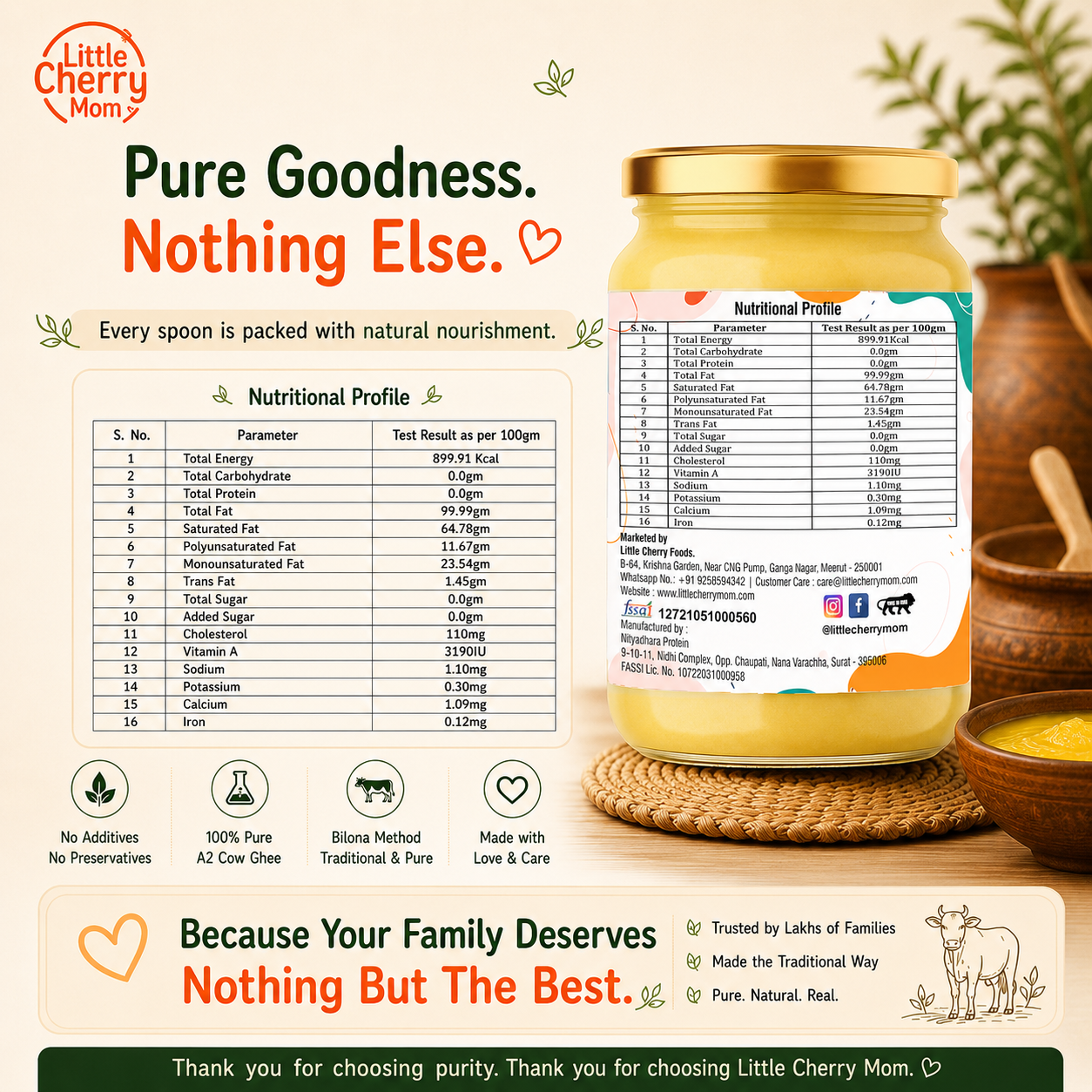

Our clean label promise
A2 Desi Cow Milk
Zero Additives & Preservatives
Traditional Methods
Trusted by 80,000+ Mothers
What goes inside
1 real ingredients. Nothing else.

A2 Cow ghee
Supports digestion, immunity, and strong bonesWhy we are different


Frequently Asked Questions
-
Regular ghee is made from hybrid breeds like HF or Jersey cows, which produce A1 beta-casein protein.
A2 ghee comes from indigenous Desi cows — like Gir — which naturally produce A2 beta-casein protein.
A2 is easier to digest and gentler on the gut, especially for babies and young children. It's what ghee was
always meant to be. -
The Bilona method is India's ancient way of making ghee: milk is curdled, the curd is hand-churned into
butter (called bilona), and that butter is slow-cooked on low heat until pure golden ghee is produced. Unlike
industrial ghee made from cream, this process retains all fat-soluble vitamins — A, D, E, K — and the
natural aroma. It takes much longer but produces a completely different product. -
A2 Bilona Cow Ghee can be introduced from 6 months, when your baby starts solids. Start with a few
drops mixed into dal, khichdi, or rice. Ghee is one of the best first fats for babies — it supports brain
development, aids absorption of fat-soluble vitamins, and helps with digestion. Always introduce new foods
gradually. -
Absolutely — this is a family ghee. Use it for everyday cooking: tadkas, rotis, parathas, rice, dal. It has a
high smoke point (around 250 degree C) making it safer for Indian cooking than refined oils. Many adults
also find it easier to digest than regular ghee because of the A2 protein. -
The Bilona process requires approximately 25-30 litres of A2 Desi Cow milk to make just 1 litre of ghee —
compared to 15-18 litres for regular cream-based ghee. Add the cost of grass-fed indigenous cows,
traditional hand-churning, and slow cooking over low heat, and you understand the difference. You are not
paying for a brand — you are paying for a process. -
Store in a cool, dry place away from direct sunlight. Ghee does not need refrigeration — room temperature
preserves the aroma and texture better. Always use a clean, dry spoon to avoid moisture entering the jar.
Best consumed within 12 months of production. Natural grainy texture or colour variation is normal and
indicates purity — not spoilage.


